
According to a report by Japanese media on June 19th, Huawei is charging licensing fees for the use of patented technology from about 30 small and medium-sized Japanese companies, which has caused many Japanese companies to panic because if they cannot reach a consensus, they may not be able to continue operating.
In addition to Japan, Huawei is also intensifying the collection of such patent fees in other countries such as Southeast Asia
Currently, Huawei is charging patent fees to manufacturers and other companies that use wireless communication modules. According to insiders from several Japanese companies, from small companies with only a few employees to startups with over 100 employees, all have received payment requests from Huawei. The patent fee payment model proposed by Huawei is to pay a fixed fee of 50 yen (approximately 2.5 yuan) or less per device, or to charge at a rate of 0.1% or less of the device price.
According to the Nikkei Chinese website, the number of Japanese companies required by Huawei to pay patent royalties may increase in the future. According to the survey company Seed Planning, wireless communication modules utilizing Huawei patented technology are indispensable for the Internet of Things (IoT), and applications such as autonomous driving, factories, healthcare, and electricity are also expanding.
There are reports that not only Japan, but also Huawei is intensifying the collection of such patent fees in other countries such as Southeast Asia.
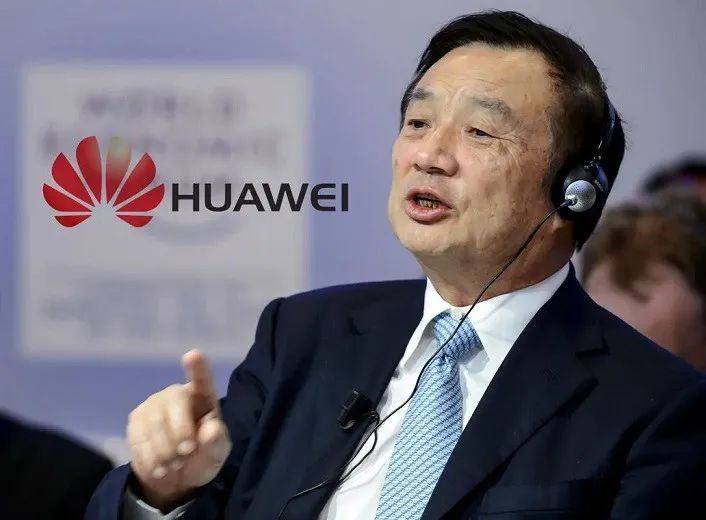
Ren Zhengfei once said that Huawei has been too busy to collect patent fees these years, so it will collect some when it is free. The fees may not be as much as Qualcomm.
Netizen: If there is no one, why not do it
Regarding Huawei's increased collection of patent fees, some netizens have expressed that it is still very popular to eat from home. If there is no one, why not do it. Are there any netizens who suggest that it is natural to charge patent fees? I used to eat at the same table, so I didn't say anything. Now when someone lifts the 'table' and uses my patent, we have to settle the accounts clearly.
But some netizens are also concerned that Huawei may become increasingly dependent on such revenue in the future, which will affect its main business and technological innovation.
Huawei 5G standard essential patent ranks first in the world
As a leading global communication technology company, Huawei has always attached great importance to innovation and intellectual property protection, ranking first in the number of patents applied in China for five consecutive years.
According to data, Huawei submitted 8440 patent applications in 2022, of which more than 90% were invention patents, involving multiple fields such as electronic communication, optical technology, switching routing, Hongmeng operating system, computing storage, photography, smart cars, etc.
Huawei is not only a patent applicant, but also a patent licensor. Huawei's Chief Intellectual Property Advisor in the United States, Steven Geissler, stated that in the three years ending in 2021, Huawei received approximately $1.2 billion in revenue from global patent licenses.
Huawei also announced for the first time the rate for 5G Standard Essential Patents (SEPs), with a maximum patent license fee of $2.5 per phone, and provided a reasonable percentage rate applicable to the phone's selling price. Huawei stated that this rate follows the FRAND principle and aims to promote the popularization and development of 5G technology.
Behind the large number of patents is a long-term investment in innovation. In 2022, research and development expenses reached RMB 161.5 billion, accounting for 25.1% of the annual revenue. The accumulated R&D expenses invested in the past decade have exceeded 977.3 billion RMB.
Recently, the China Academy of Information and Communication Technology released the latest data in the "Global 5G Standard Essential Patents and Standard Proposal Research Report (2023)", which shows that Huawei ranks first in the world in terms of 5G standard essential patents.
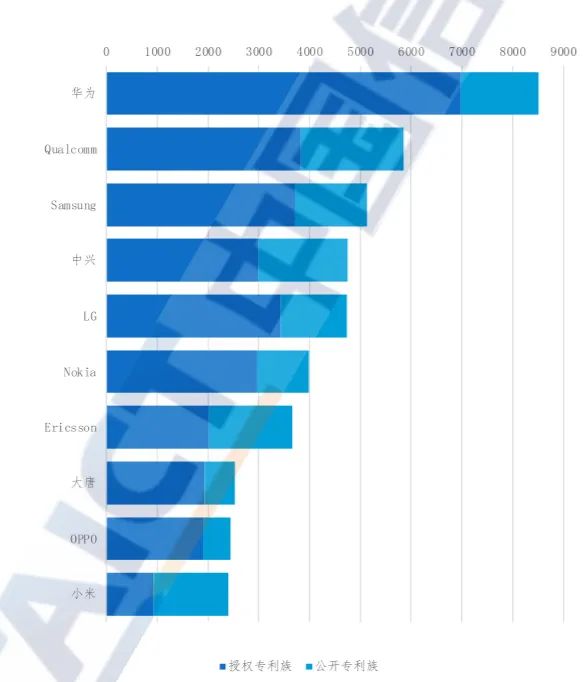
Following closely behind are Qualcomm and Samsung, with one standard essential patent number approaching 6000 and the other just over 5000. There is a significant gap in quantity between the two compared to Huawei.
China has a long way to go to cultivate the "golden mountain" of patent profits
When it comes to patent licensing, some members of the public may come up with the words "patent giant" in their minds. Collecting patent fees from mobile phone manufacturers has become an important source of profit for some international communication giants, and patent litigation between communication companies and mobile phone manufacturers has also become a norm in the international communication market.
As early as 2017, Qualcomm and Apple, two major technology giants, launched a two-year patent "century war", and some Apple devices were even banned from selling in the Chinese market as a result. This storm has also made the importance of patent licensing in the communication field well-known to the public.
Another communication giant that has long faded from the smartphone market is also a beneficiary of patent licensing fees. Nowadays, Nokia phones are rarely seen in the market, but Nokia still possesses a large number of patented technologies related to mobile devices, and patent licensing fees have gradually become an important source of revenue. According to Nokia's official website, Nokia's research and development expenditure in 2021 will reach approximately 4 billion euros, and it will continue to invest heavily in research and development to create new patented inventions.
In the international market, high-value patents have long brought returns to enterprises as highly valuable intellectual property. However, in China, where the intellectual property system was relatively late in construction, there is a long way to go to cultivate the "golden mountain" of patent profits.
Note: The images and text are sourced from the internet. If you have any valuable suggestions, please feel free to contact us for updates and revisions!

One on one service for appointment experts
