
Recently, the well-known washing and care brand of Procter&Gamble, Shufujia, has sparked a heated discussion among netizens about a pure white and fragrant soap containing a fluorescent agent.
Shufujia Soap Detected Fluorescent Agent
The cause of the incident came from a video released by an evaluation blogger. In the video, the blogger evaluated the fluorescent content of the Shufujia soap series and other brands of soap, and found that Shufujia, a pure white and fragrant soap, had a higher fluorescent content.

In addition, other bloggers have found that Shufujia and other fragrant soaps also contain trace amounts of fluorescent agents, such as Shufujia red pomegranate with a fluorescent agent content of 0.07 and Shufujia camellia flower soap with a content of 0.06.
The video caused a sensation, after all, Shufujia soap is well-known in the domestic market.
Shufujia responds that soap contains fluorescent agents: it is a qualified and legal product
On June 5th, the customer service of the Shufujia brand responded to the controversy caused by the product, stating that in order to adjust the color of the soap, the formula of Shufujia pure white soap added a small amount of color adjustment ingredients, which will not affect the skin during normal use. The products have undergone strict safety assessment and comprehensive testing before being launched, and meet the requirements of relevant Chinese laws and regulations for product quality. They are qualified and legal products.
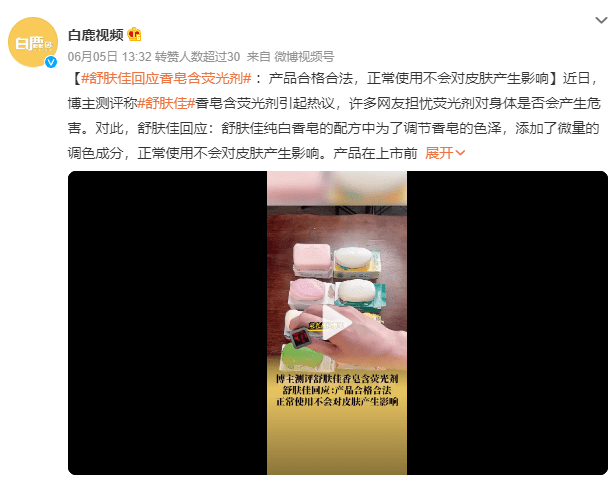
But consumers seem to be not satisfied with Shufujia's response, with some netizens saying, "Isn't it okay not to use fluorescent agents? Do you have to use them? Which merchant will use them and blackmail which one. Moreover, Procter&Gamble did not specify the presence of fluorescent agents in the product ingredient list, which is a violation of consumers' right to know
Shu Fujia Has Frequently Appeared in the Public Opinion Field
This is not the first time that Shufujia has appeared in the public opinion arena. Previously, Shufujia was fined 200000 yuan by relevant departments for promoting the removal of 99% of bacteria from its products, causing consumer dissatisfaction.
It is worth noting that compared to being caught in more than one public opinion storm in recent years, the former Shu Fu Jia can be said to be the number one brand in the soap industry and the preferred brand for Chinese people to purchase soap. The former Shu Fu Jia can be said to have shouldered the heavy burden of P&G entering the Chinese market and helped it open up the Chinese market without exaggeration.
In 1988, Procter&Gamble established its first joint venture in Guangzhou, Guangzhou Procter&Gamble Co., Ltd., taking the first step in expanding its presence in the Chinese market. At that time, in the Chinese market where one piece of soap could solve all cleaning problems, Procter&Gamble pinned its hopes for layout on Shufujia.
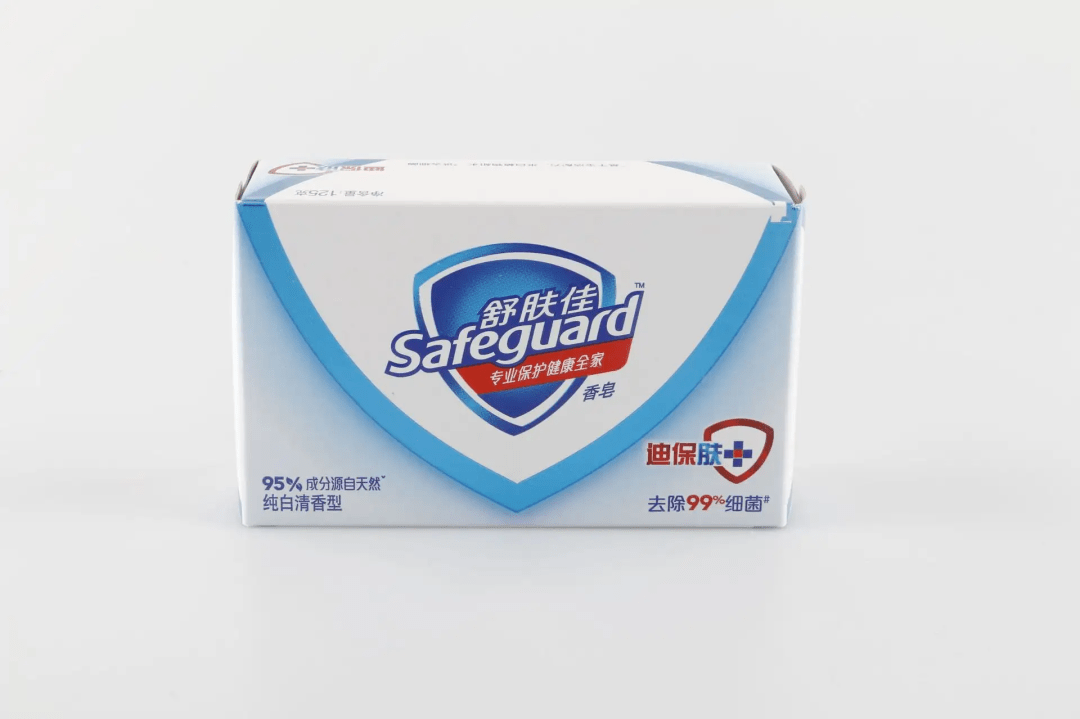
In 1992, Procter&Gamble launched Shufujia. In order to quickly capture the market, Procter&Gamble invested in over 50 production lines in China. In 2003, Procter&Gamble spent a staggering 220 million yuan to purchase three consecutive months of advertising broadcasting rights during the prime time of CCTV.
With the popularity of the advertisement "Shufujia, Love Mom, Take Care of the Whole Family" across the country, Shufujia has successfully stood at the top of the soap market. Public data shows that in 1998, the domestic soap market accounted for less than 10%; In 2005, the market share of Shufujia reached 41.95%, ranking first in the domestic soap market.
Nowadays, although Shufujia still occupies the front row in the soap industry, with the shrinkage of the entire market and competition from brands such as Shanghai Jiahua Liushen and Lishi, Shufujia's market share has declined, currently accounting for 35.7%.
Shufujia is recognized as a "well-known trademark"
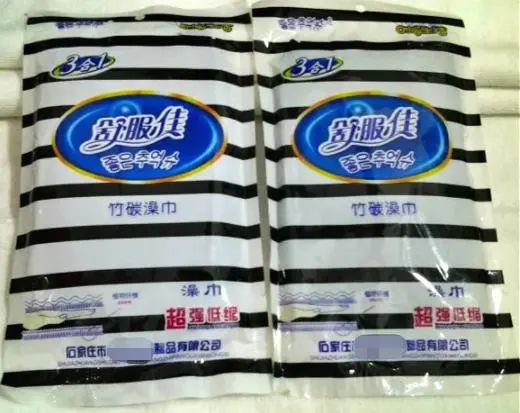
If you see a "Shufujia" brand towel on the shelf, would you think it is a product under the Shufujia brand? Attention, this "Shufu Jia" is not that "Shufu Jia"!
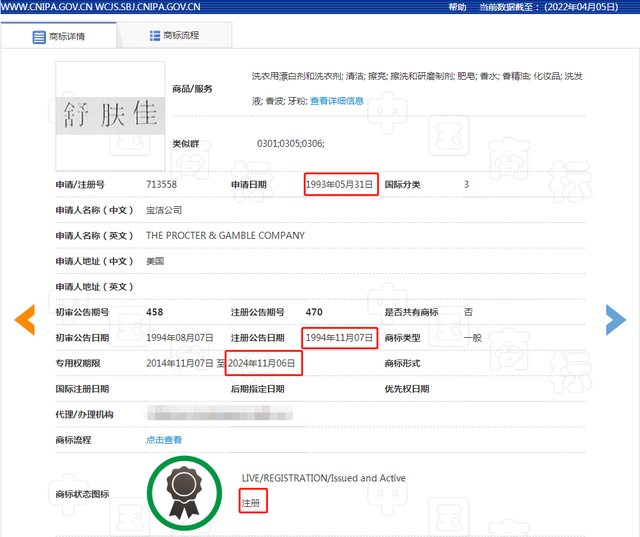
In 1993, P&G applied for the registration of No. 713558 "Shufujia" trademark on Class 3 "Soap, perfume, Shampoo" and other commodities. After renewal, the trademark is still in effect.
In September 2010, a needle textile company in Shijiazhuang applied for the registration of trademark 8689072 "Shufujia" (disputed trademark) on category 24 "bath towels; textile towels". The trademark registration announcement was made in October 2012.
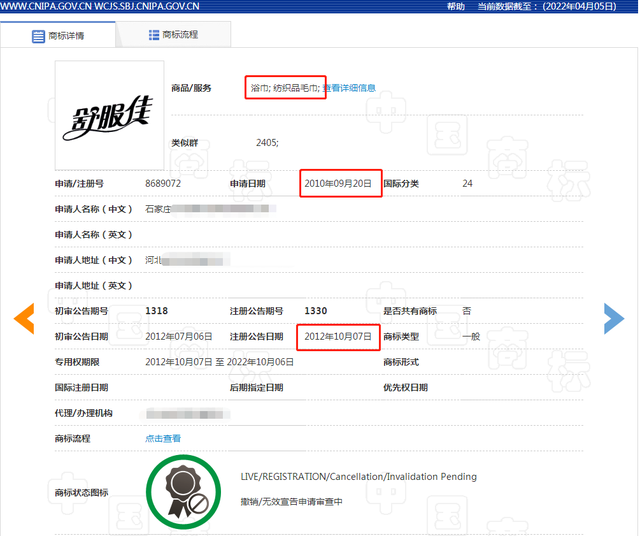
In 2022, the Beijing Intellectual Property Court determined that P&G's "Shufujia" trademark constituted a well-known trademark, and that the "Shufujia" trademark applied for registration by a knitwear company on the "textile towel, bath towel" commodity constituted a copy and imitation of P&G's "Shufujia" trademark, and decided to reject the lawsuit request of a knitwear company and declare its "Shufujia" trademark invalid. The second instance court also rejected the appeal of a certain needle textile product company and upheld the original judgment.
How much do you know about well-known trademarks?
There are two basic modes of recognition for well-known trademarks: passive recognition and active recognition.
(1) Passive determination method: The trademark office shall make legal determination and the people's court shall make judicial determination - passive determination is also known as post determination. If the party concerned believes that the registered trademark of another person violates the provisions of the Trademark Law, they may request the Trademark Review and Adjudication Board to revoke the registered trademark in accordance with the provisions of the Trademark Law and its implementing regulations, and submit relevant materials to prove that the trademark is well-known. If a well-known trademark is applied for through a trademark dispute case, the application should be submitted to the Trademark Review and Adjudication Committee of the State Administration for Industry and Commerce. When the trademark owner claims rights, that is, in the case of actual rights disputes, at the request of the trademark owner, the relevant department determines whether the trademark is well-known and whether it can provide expanded protection. Passive recognition is the basic mode for judicial authorities to recognize well-known trademarks. Although the protection provided by passive recognition for well-known trademarks is passive, this recognition is aimed at achieving cross class protection and revocation of preemptive registration, and it has strong pertinence.
(2) Active recognition method: The trademark owner applies for recognition on their own - Active recognition method, also known as prior recognition, Article 14 of the Trademark Law states that well-known trademarks should be recognized as facts that need to be recognized in handling trademark cases based on the request of the parties involved. The recognition of a well-known trademark should consider the following factors:
(1) The level of public awareness of the trademark;
(2) The duration of use of the trademark;
(3) The duration, extent, and geographical scope of any promotional work for the trademark;
(4) The record of the trademark being protected as a well-known trademark;
(5) Other factors that make the trademark well-known.
The recognition of Shufujia as a well-known trademark is a passive way of recognition.
A well-known trademark is essentially a form of protection for a trademark, which does not reflect product quality or brand reputation, nor is it an honorary title. The recognition of well-known trademarks is a protective measure for trademarks with high visibility, which can to some extent prevent behaviors such as "riding on famous brands" and "hitchhiking", allowing enterprises to occupy a favorable position in trademark disputes and disputes. The use of "well-known trademarks" as advertising is explicitly prohibited, but they can still enjoy special trademark protection rights different from ordinary trademarks.
Generally speaking, well-known trademarks have a high level of recognition among the government and the public, and the industrial and commercial departments are naturally more effective in combating infringement and counterfeiting than general trademarks. At the same time, well-known trademarks have a high market reputation and can obtain more commercial benefits when licensing and transferring trademark rights. They are also more easily supported when used for commercial activities such as pledge, financing, investment, credit, bidding, etc. This undoubtedly plays an extremely important role in the development or transformation and upgrading of enterprises.
However, it should be noted that only through honest business activities, high-quality product quality, comprehensive after-sales service, and continuous technological innovation can enterprises truly improve their core competitiveness, win the market for enterprises, and make their brands truly "well-known" trademarks.
Note: The images and text are sourced from the internet. If you have any valuable suggestions, please feel free to contact us for updates and revisions!

One on one service for appointment experts
