
On June 6th Beijing time, Apple held its annual Apple Global Developers Conference. At this developer conference, Apple launched its first MR hybrid reality product, Apple Vision Pro, which is priced at $3499 in the US market and will be available for use in office, gaming, and other scenarios early next year.
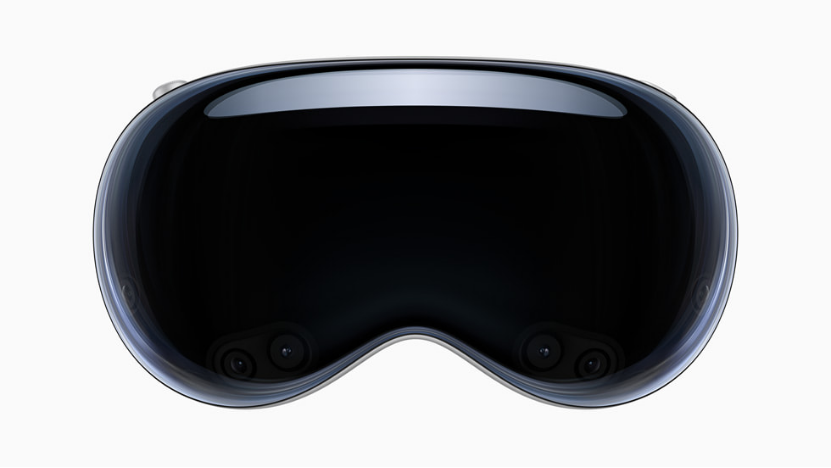
Apple Vision Pro, Apple's first MR hybrid reality product
Apple has been launching projects since 2016, and the MR product has become another heavyweight technology product for Apple, following the iPhone, iPad, Mac, Apple Watch, and AirPods. Apple CEO Cook said, "Just like the Mac has brought us into the era of personal computing, the iPhone has brought us into the era of mobile computing, and Apple Vision Pro will take us into the era of spatial computing
As early as a few years ago, there were rumors in the market that Apple's head display devices were about to be released, but Volkswagen has not yet waited for this potentially revolutionary product. Apple CEO Cook has previously stated that MR headphones will replace the iPhone in the next 10 years.
What is MR?
Before clarifying the complex technical term MR, we can first understand the concepts of VR and AR.
VR refers to virtual reality, which immerses users in a virtual environment that is completely detached from the real world by creating a completely virtual environment.
AR refers to augmented reality, which presents created virtual objects in the real world.
MR is a hybrid reality that combines VR and AR, seamlessly integrating virtual objects with real-world objects and environments. If you want to achieve MR effect, you still need to use hardware devices, such as MR glasses. It can overlay virtual objects into the user's real field of view, allowing users to simultaneously see and interact with elements of both the real and virtual worlds.
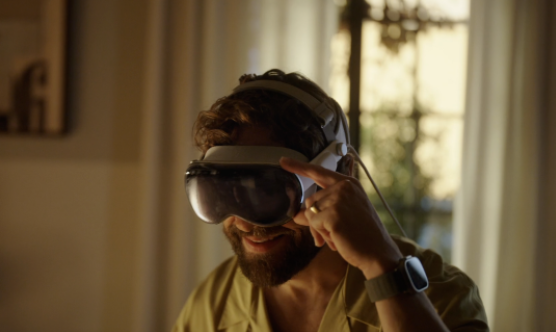
Apple claims that this MR is Apple's first spatial computing device and named it Apple Vision Pro. This MR seamlessly integrates digital content into the real world, allowing users to stay present and connected to others. Vision Pro creates a borderless canvas, allowing the app to break through the limitations of traditional displays and bring users a brand new 3D interactive experience, controlled by eyes, hands, and voice.
In terms of operating system, Vision Pro is equipped with Apple's world first space operating system, visionOS. In terms of applicable scenarios, Vision Pro will focus on gaming, office, communication, and more.
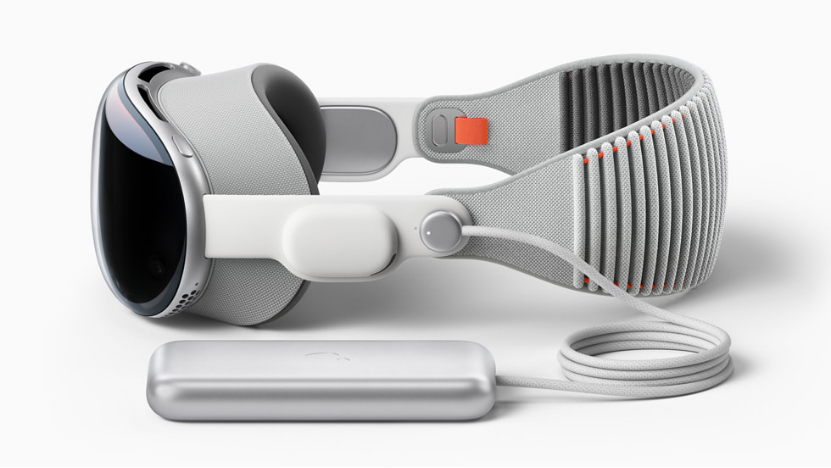
Apple Vision Pro, Apple's first MR hybrid reality product
Apple "sharpens a sword in ten years"
Apple said, 'I have prepared for this day for many years.'
As early as 2010, Apple acquired Swedish facial recognition technology company Polar Rose to launch a VR layout.
In 2013, it acquired PrimeSense, a 3D sensing and Motion capture technology company; In 2015, it acquired Faceshift, a facial Motion capture technology company, and Metaio, an augmented reality startup; In 2016, it acquired facial expression AI analysis company Emotient and AR social software Flyby Media; In 2017, acquired Vrvana, a hybrid reality technology provider; In 2020, acquired the virtual reality company Next VR.
In terms of technological reserves, Apple had a VR related patent layout as early as 20 years ago, with the main patent applications concentrated in the past 10 years.
As of the latest, Apple and its affiliated companies currently have over 5900 patent applications related to XR (Extended Reality) in 170 countries/regions worldwide. Among them, invention patents account for over 98%. From a technical perspective, Apple's current patent layout in this field mainly focuses on related sub technology fields such as displays, sensors, processors, user interfaces, headworn devices, virtual objects, etc.
From a trend perspective, Apple's patent applications in this field have significantly increased since 2017, and since then, the annual patent applications have remained above 600.
Technology giants are deploying one after another
It is worth noting that before Apple launched the Apple Vision Pro, Meta was the first to release a consumer grade MR head display Meta Quest 3128GB priced at $499.99. OPPO also released its first MR product, OPPO MR Glass Developer Edition, at the Augmented Reality World's fair; At present, the product is mainly provided to developers and the price has not been publicly disclosed.
Some institutions believe that the current hardware in the headwear display industry can basically meet user needs, but there is a lack of revolutionary products like the iPhone 4. In addition, the content is concentrated in the gaming field, with limited application scenarios, which limits the development of the industry. Apple's MR release is expected to fill the gap in content and benchmark products.
However, some analysts believe that the Apple Vision Pro is expensive and may affect shipment volume. It is expected that the pricing of the second generation MR products in the future will be closer to users, and their shipment volume is expected to increase.
CITIC Securities believes that the development logic and trend of the global computing platform carrier, the strategic layout of the technology giant, the investment in the capital market, and the progress of display and interaction technology make XR a promising carrier for the next generation of computing platform. According to the calculation, XR's industry space is far more than one trillion yuan. Meanwhile, within 2023, Apple will launch new MR products, which are expected to greatly promote the development of the XR industry and drive investment opportunities in the industry chain. Currently, VR/MR has entered a mature iteration stage, and it is expected that AR will initially achieve commercialization in 2025. Once commercialized, it will be fully popularized within about 5 years (around 2030), and MR will serve as a transitional product between VR and AR.
Note: The images and text are sourced from the internet. If you have any valuable suggestions, please feel free to contact us for updates and revisions!

One on one service for appointment experts
