
In 2000, the streets and alleys were filled with Stefanie Sun.
In 2023, both big and small networks will be "AI Stefanie Sun"
A few months after the launch of ChatGPT, which sparked concerns about layoffs across the internet, AI singers who are also part of AIGC technology are becoming the new top stream in the music industry.
AI Stefanie Sun's Live Singing Continuously Starts Up After Coming Out of Circle
In mid April, AI singer "AI Sun Stefanie" was born. So far, "AI Stefanie Sun" has covered at least 60 songs, including songs that are well-known to fans in Cantonese, Japanese, English, and Russian.
At the same time, "AI Jay Chou" and "AI Faye Wong" have also been introduced one after another. However, "AI Stefanie Sun" has successfully made her debut among many AI singers with the voice of singer Stefanie Sun, who praised her as "the most hardworking singer in the Chinese music industry in 2023".
In early May, a music playback platform launched a cover album of "AI Stefanie Sun". On Bilibili, "AI Stefanie Sun" has already started live song ordering. Simply enter #+song name in the comment area to hear "AI Stefanie Sun" singing this version of the song.
Some netizens believe that the well trained "AI Stefanie Sun" currently has a similar timbre, but in addition to her timbre, she also has emotions, pronunciation, and so on, which are all things that "AI Stefanie Sun" cannot do at present. Some netizens expressed that they really like Stefanie Sun's voice. Although AI is not perfect, it does give us unlimited possibilities.
Some netizens have also begun to imagine that in the future, they can hear new songs from singers such as Huang Jiaju and Leslie Cheung.
Another netizen trembled: I didn't expect AI to make waves in the music industry first! Singers are in danger of being laid off, not to mention us office clerks! In some aspects, it's really a bit thoughtful and terrifying
AI singers are 'trained'
On video websites, there are also people teaching everyone how to train AI singers.
In relevant videos, UP mainly uses the "so vits" algorithm. Sovits is a type of "timbre conversion" that requires the preparation of a dataset in advance. For example, to train "AI Stefanie Sun", it is necessary to prepare multiple high-quality songs sung by Stefanie Sun, as well as her interviews, live broadcasts, and other materials, and the higher the quality and quantity, the better. Perform some detailed processing such as "removing breathing sounds" and enter a series of complex "training" to obtain your own "AI Stefanie Sun".
A simple summary is to train the voice of an AI singer using the singer's existing songs, and then replace the voice of other singers, leaving behind details such as the singer's tone and intonation when replacing. Therefore, the effect of an AI singer is very realistic.
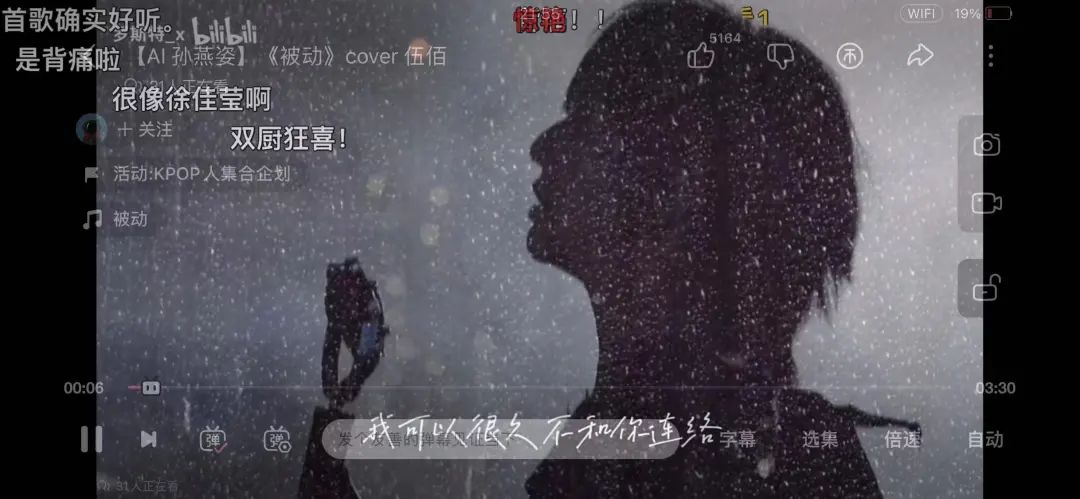
In the comment section of the above video, someone asked if it is possible to train the voice of an AI singer and have the AI use this voice to read or sing an original text? Multiple netizens introduced that this technology is more complex, but it already exists, but the current effect is not particularly good.
That is to say, in the future, AI singers can not only cover, but also publish their own songs if songwriters create works for them.
AI Singer Touches Many Gaps in Current Copyright Law
While AI singers are rapidly becoming popular, a series of legal disputes have also arisen.
Sun Shan, an associate professor at the School of Civil and Commercial Law (Intellectual Property School) of Southwest University of Political Science and Law, stated that "AI singers have touched upon many gaps in the relevant provisions of the current Copyright Law, resulting in many new problems.
Sun Shan said that the large number of songs used in training AI singers is similar to the large amount of materials used in training ChatGPT. Is using these songs without relevant authorization infringing copyright? This is a gap in the current copyright law
Sun Shan believes that AI singers also involve infringement of the singer's personal rights. The right to sound is the 'equal right' in Article 990 of the Civil Code of China, which includes the 'right to life... privacy and other rights enjoyed by civil subjects'. This aspect also needs further clarification by the legislative body

In some aspects, AI singers have already engaged in infringement behavior. Sun Shan introduced that when AI singers perform commercial songs, such as "AI Stefanie Sun" live streaming, without authorization from the original lyrics and music copyright owner, singer, or recording producer, it is definitely an infringement of copyright. At the same time, AI singers use photos of the original singer in many of their audio, and even some even include simple blinking, waving, and other actions, which is a violation of the singer's portrait rights
Finally, Sun Shan pointed out that the statement "only for personal appreciation and not for commercial use" in many AI singer works has no legal significance. The ultimate purpose of AI singers' works is for commercial gain, as it cannot prevent others from using these songs for commercial purposes
Note: The images and text are sourced from the internet. If you have any valuable suggestions, please feel free to contact us for updates and revisions!

One on one service for appointment experts
