
I thought I was drinking 'Red Bull', but upon closer inspection, it was' Tired Bull '. Recently, Feng Tao, a citizen of Yichun, Heilongjiang, suffered from the "Oolong Incident", which once again exposed the trademark infringement and unfair competition that had existed for many years.
Without careful observation, it is easy to mistake 'tired ox' for 'red ox'
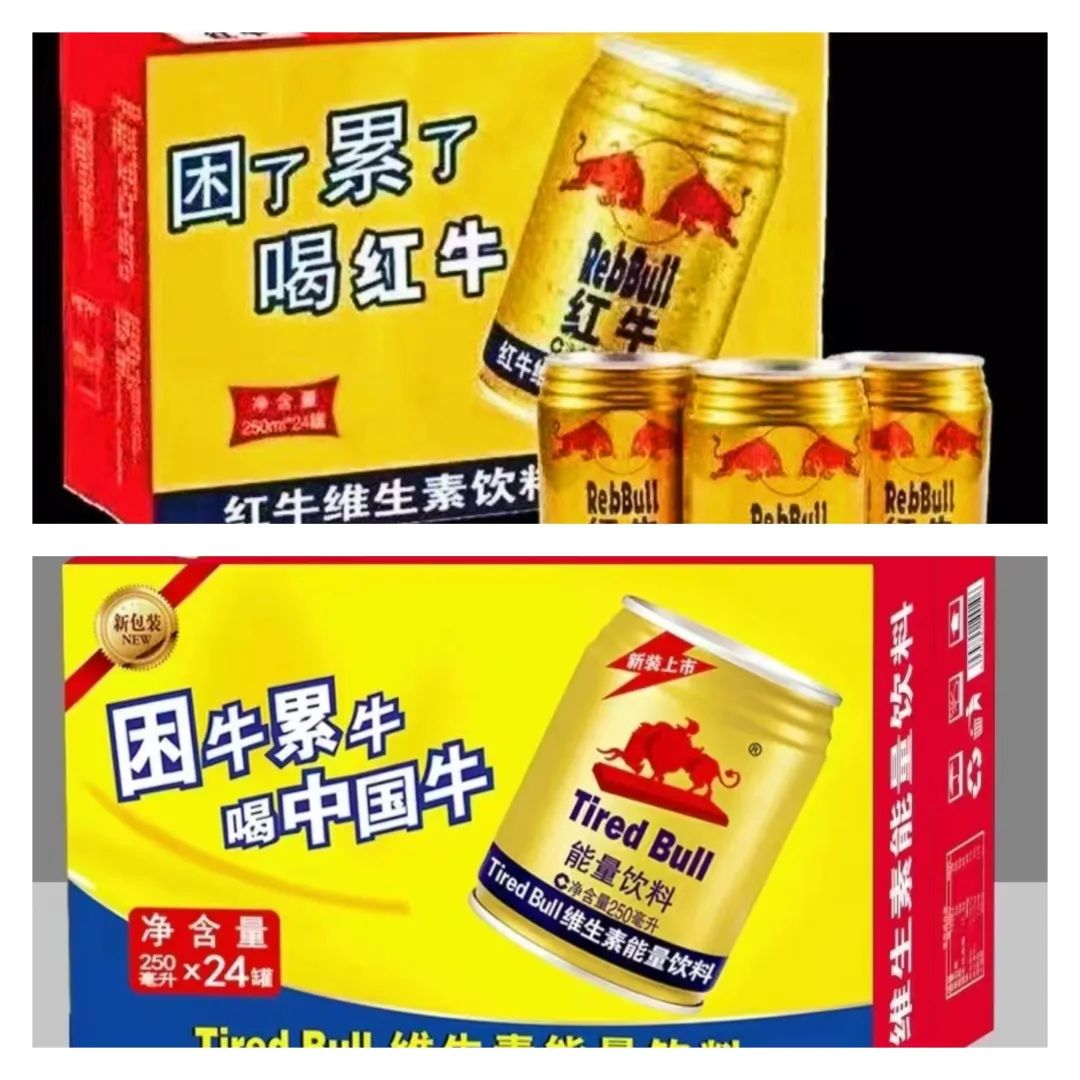
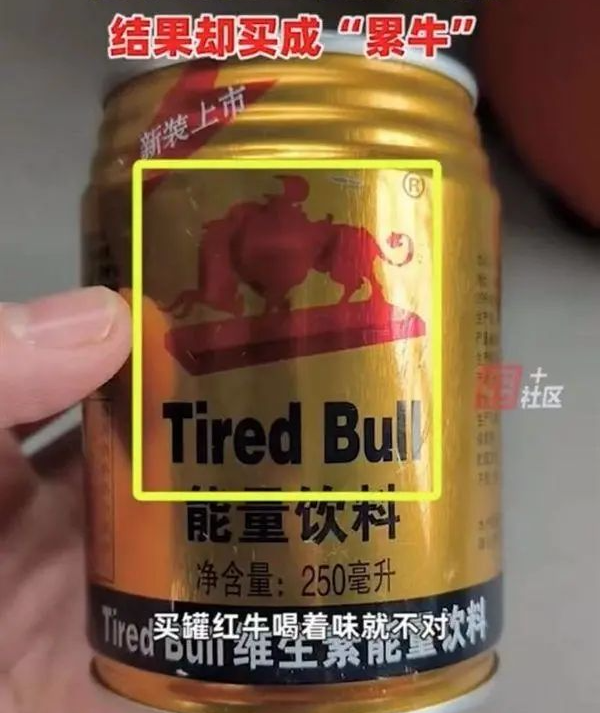
On the whole, the text, bottle color and even icons are almost the same as Red Bull. But if you look carefully, you will find that there are minor changes in the text and icons. "Red Bull" has been changed to "Tired Bull", "Red Bull" has been changed to "Tired Bull", and "Red Bull" has been changed to "Tired Bull", changing two sprinting cows into one standing cow.
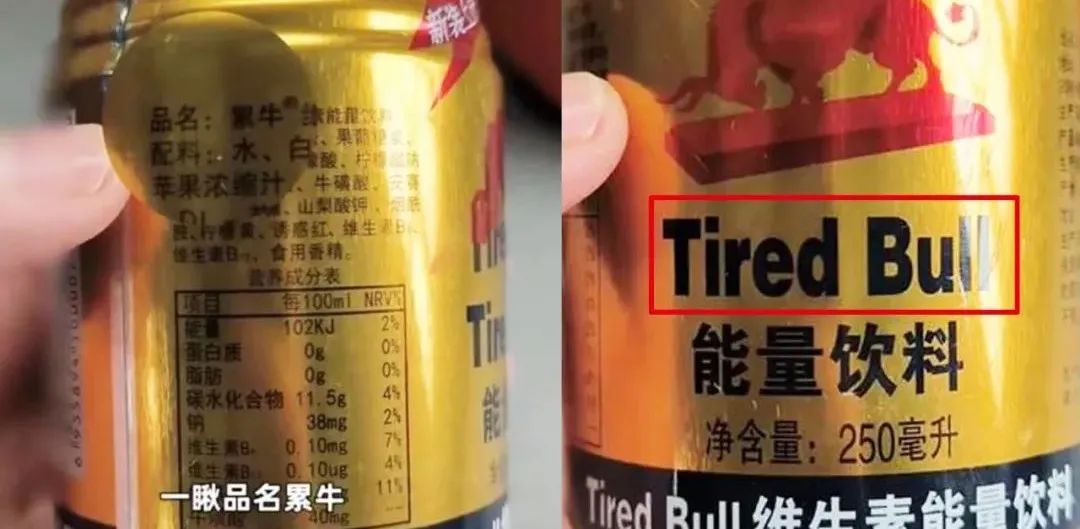
According to the released video, the reporter found that this canned beverage, which is quite similar to the "Red Bull" beverage, has the real name of Leiniu Vitamin Energy Beverage, produced by Hebei Huayang Beverage Co., Ltd., legal representative is Zhao Dongxue, and the manufacturer is Red Bull Vitamin Beverage (Tianjin) Co., Ltd.
Subsequently, the reporter called Red Bull's consumer service hotline and learned that neither Hebei Huayang Beverage Co., Ltd. nor Red Bull Vitamin Beverage (Tianjin) Co., Ltd. had any cooperation with Red Bull.
It is reported that Zhao Dongxue has also been the legal representative of several "Red Bull" companies, including Red Bull (Tianjin) Beverage Co., Ltd., Vita (Tianjin) Food Co., Ltd., Red Bull Fortified Beverage (Tianjin) Co., Ltd., Red Bull (Tianjin) Beverage Co., Ltd., Red Bull (Tianjin) Technology Co., Ltd., Red Bull (Tianjin) Beverage Sales Co., Ltd. However, these so-called "Red Bull" companies mentioned above have no connection with Red Bull Company.
Not only that, Zhao Dongxue also has 8 companies under his name, namely Chunniu (Hebei) Technology Co., Ltd., Lotus (Tianjin) Beverage Co., Ltd., Jiugui Liquor Industry (Tianjin) Co., Ltd., Anmuxi Dairy Industry (Tianjin) Co., Ltd., Tongrentang Guoyao (Tianjin) Co., Ltd., Guoyi Pharmaceutical (Tianjin) Co., Ltd., and Wangzi (Tianjin) Food and Beverage Co., Ltd.
Person in charge of Leiniu: We all have registered trademarks, and we are not afraid of him checking them
According to the investment information of Chunniu (Hebei) Technology Co., Ltd., the reporter contacted the person in charge of the company surnamed Li.
We all have registered trademarks that can be checked by the trademark office. We are not afraid of him checking, and our procedures are complete. "The person in charge surnamed Li said over the phone that the drink that Feng Tao drank was only similar in appearance to someone else (Red Bull), but the actual name is actually the" Tired Bull "functional drink. As of now, it has been sold to the public for almost two years, and the sales situation is very good. Some customers only pull three or four cars at once, Pick up hundreds of items.
Subsequently, Mr. Li took the initiative to send some promotional materials about 'tired cows' to the reporter. The reporter noticed that, unlike the authentic Red Bull's' tired and tired, drink Red Bull', the promotional slogan for 'tired cows' beverage is' tired and tired, drink Chinese cows'
We are our own brand and have nothing to do with Red Bull. We have all the necessary procedures, but if the procedures are not complete, we will definitely check one by one. We can check casually, whether we have anything to do with him or not. "Mr. Li promised confidently over the phone that the" Red Bull "beverage currently being sold to the outside world has a registered trademark and a business license." Our (trademark and business license) are all real, not fake, what are we afraid of
As a pioneer in opening up the Chinese functional beverage market, behind these well-known advertising slogans lies a "gold mine" built by Red Bull, which naturally attracts many imitators.
The price chaos caused by high popularity and lower prices has become a protective color for the rampant use of counterfeit goods. Red Bulls and dragons are mixed on the market, and many people will accidentally buy "fake" red Bulls.
Due to the complex historical background of the registration process of the Red Bull trademark in China, coupled with the prolonged trademark dispute in recent years, Red Bull has gradually lost its original market position and has also made the hidden copycats more reckless.
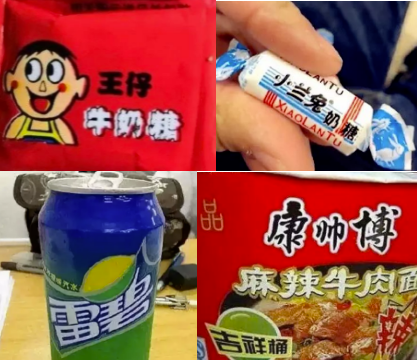
In addition to 'tired cows', there are also' Kangshuaifu ',' Leibi ',' Six Nuclear Bombs', 'Xiaolan Rabbit', and 'Wang Zi'. In recent years, the well-known 'Three Squirrels' have been counterfeited into' Three Foxes', and Oreo has been highly imitated by 'Yue Li Yue'. These counterfeit products always inadvertently deceive consumers, not only infringing on the intellectual property rights of legitimate enterprises, but also disrupting market order and endangering consumer health and rights.
How did these copycat enterprises achieve this?
Let's take a look at how these counterfeit enterprises "disguise" themselves. They usually use the following methods:
1. Register similar trademarks
This is the most common method. Shanzhai enterprises may intentionally register trademarks similar or similar to well-known brands, such as "Lehu", "Xiaomi", "Dajiang", etc., using consumers' impressions and perceptions of the original trademark to cause confusion and misidentification.
This method sometimes also utilizes differences between Chinese characters and pinyin, such as "Red Bull" and "Hong Niu", "Xiaomi" and "Xiao Mi", or changes in font and color, such as "Pepsi Cola" and "Pepsi Cola", "Wahaha" and "Wahaha".
2. Registered approximate company name
This is another common method. Shanzhai enterprises may intentionally register company names that are similar or similar to well-known brands, such as "Xiaomi Trading Co., Ltd." and "Dajiang Robot Co., Ltd.", using consumers' impressions and perceptions of the original company name to cause confusion and misunderstanding.
This method sometimes takes advantage of regional and industry differences, such as "Jianye Residential Group (China) Co., Ltd." and "Jianye Marketing Planning Company", "Anmuxi Dairy (Tianjin) Co., Ltd." and "Anmuxi Catering Management Company".
3. Imitate the outer packaging and promotional language
This is the most intuitive means. Shanzhai enterprises will deliberately imitate the packaging and promotional slogans of well-known brands, such as the canned beverage of "Lainiu" which is quite similar to the canned beverage of "Red Bull", and the trademark is also arranged vertically, with the same font color and background color. The only difference is the non regular script processed "coconut vein".
4. Free riding or malicious registration
Counterfeiting enterprises may intentionally ride on the goodwill of well-known brands or maliciously register trademarks of well-known brands in order to obtain illegitimate benefits. For example, someone registered a trademark called "Yichun" on Taobao for selling clothing, but was found to be a store called "Korean Fashion Clothing Store" using "Yichun" as its advertising promotion for selling clothing. After the original "Yichun" trademark owner filed a lawsuit, the court ruled that the Taobao store owner would stop infringing and compensate for economic losses.
How do we prevent and identify counterfeit products?
1. Follow the official information of genuine enterprises
When purchasing goods or services, consumers should prioritize the official channels of genuine enterprises, such as official websites, official WeChat, official flagship stores, etc., to avoid purchasing from unknown platforms or stores. At the same time, consumers should pay attention to the official information of genuine enterprises, such as trademark registration certificates, patent certificates, quality certification certificates, etc., to understand the trademark name, logo, appearance and other characteristics of genuine enterprises, in order to distinguish them from counterfeit products.
2. Compare the quality and price of goods or services
Consumers should carefully check the quality and price of goods or services when purchasing them, and compare their differences with genuine products. Generally speaking, counterfeit products have poor quality and may have defects, defects, damages, and other issues, and may use inferior or harmful raw materials, components, additives, etc. At the same time, the price of counterfeit products is low, which may be far lower than the market value or the price of authentic products to attract consumers to buy.
3. View the identification and description of the product or service
When consumers purchase goods or services, they should check the identification and description of the goods or services, such as trademark name, logo, packaging, label, instruction manual, etc. Generally speaking, the identification and description of genuine goods or services will clearly and clearly display their manufacturer, production address, production license number, contact information, and other information, and comply with relevant laws and regulations. The identification and instructions of counterfeit products may have issues such as ambiguity, false and misleading information, and violations of laws and regulations.
4. Query relevant information about goods or services
When consumers purchase goods or services, they should check the relevant information of the goods or services, such as trademark registration information, patent information, quality certification information, consumer evaluation, etc., in order to understand the true situation and reputation of the goods or services. Consumers can search for information such as the manufacturer, production date, and shelf life of the product by scanning its barcode, QR code, etc. They can also search for relevant evaluations, complaints, and reports of the product or service through search engines, consumer evaluation websites, social media, etc.
5. Keep shopping vouchers and evidence well
Consumers should keep their shopping vouchers and evidence, such as invoices, receipts, contracts, orders, express orders, chat records, etc., when purchasing goods or services, so that they can promptly safeguard their legitimate rights and interests in case of consumption disputes.
Copying well-known brands may seem like a shortcut to success, but blindly imitating will eventually be branded as a "copycat". Only by truly attaching the trademark to high-quality products or services, occupying the market with quality, and moving consumers with word-of-mouth is the best interpretation of the value of the trademark.
Note: The images and text are sourced from the internet. If you have any valuable suggestions, please feel free to contact us for updates and revisions!

One on one service for appointment experts
