
Patents can promote innovation and the economic development of a country. Patents are evidence of invention and an important basis for protection through legal documents.
For science and technology companies, an important criterion to measure innovation is whether there are enough core patents! In this regard, Huawei has always been among the best.
Huawei signed a global patent cross licensing agreement with OPPO
Recently, Huawei signed a global patent cross licensing agreement with OPPO, which covers the necessary patents of cellular communication standards, including 5G standards.
As one of the companies with the largest number of 5G patents, patent licensing will also become an important source of revenue for Huawei.
In fact, Huawei's 5G patent fee cooperation is not only with OPPO, but also with Samsung, the world's largest mobile phone brand. The latter has also achieved 5G patent licensing cooperation with Huawei, which is larger than OPPO's, but both sides are very low-key about this, and the details have not been released.
In March last year, Huawei announced the patent fee standard for 5G multi-mode mobile phones. The maximum patent license fee for a single mobile phone complying with the 5G standard was $2.5, and a reasonable percentage rate applicable to the mobile phone price was provided.
This charging standard is not applicable to the cross licensing agreement between Huawei and OPPO.
Shen Hongfei, Vice President of Huawei's Legal Department and Head of Major Projects Department, said that whether the patent cross licensing agreement is paid or not depends on whether the patent values of the two companies are equal.
If a company has fewer patents of its own, the number of patents that can be exchanged for the other company is also relatively small, or it has to pay higher licensing fees. In the case of Huawei and OPPO, OPPO pays for Huawei.
Shen Hongfei revealed that Huawei has reached license agreements with nearly 20 manufacturers in the past year, including Samsung, OPPO, NORDIC and so on, including smart phones, smart cars, networks, IoT and so on, covering 4G/5G, WiFi, networks and other fields.
Including OPPO and Samsung's products, Huawei expects that about 350 million 5G mobile phones will be licensed this year. Shen Hongfei also said that Huawei is still negotiating with other major manufacturers around the world on licensing, and most of them have expressed their willingness to pay, but the specific conditions are still being negotiated.
Although OPPO is not the first Huawei company to sign a patent cross licensing agreement, it is the largest company with the largest number of its own patents.
According to the data provided by OPPO, as of September 30, 2022, OPPO had more than 83000 patent applications and 42000 patent authorizations worldwide. Among them, the number of invention patent applications exceeded 75000, accounting for 90%. Before that, OPPO had also reached patent cross licensing agreements with Qualcomm, Ericsson, Sharp and other companies.
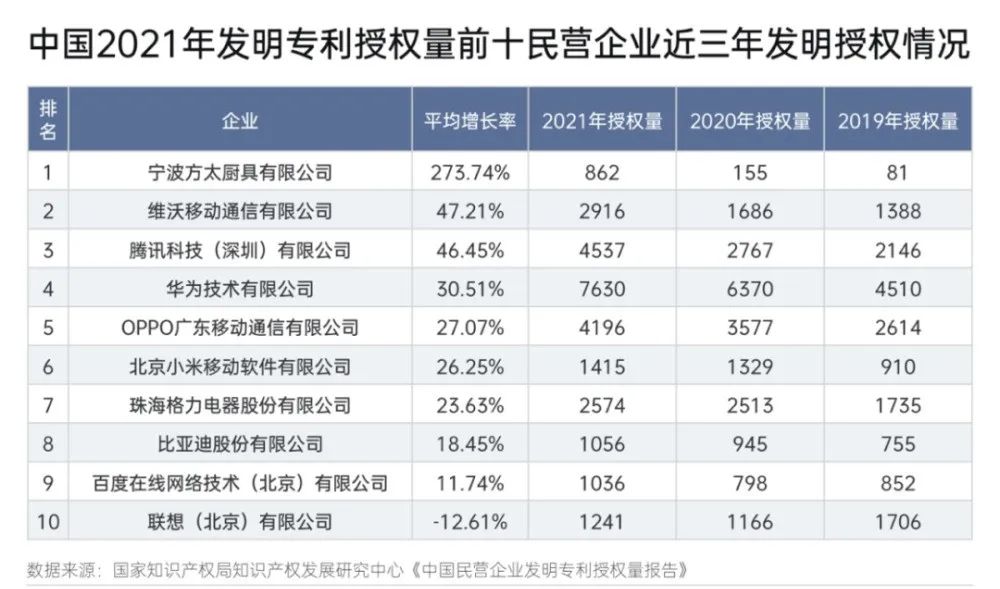
The report shows that OPPO ranks fifth in the number of invention patents granted by private enterprises in China in recent three years with 4196 invention patents; Huawei's patent accumulation has always been amazing, ranking fourth on OPPO with the number of 7630 invention patents.
Signing cross licensing agreement can effectively avoid litigation war
Intellectual property has always been an invisible battlefield for global technology enterprises. Because of this, a number of patent litigation cases occur frequently, taking a long time, coming and going.
Huawei, Samsung, OPPO, Nokia and other enterprises have been brought to court due to patent disputes.
In addition to mobile phone manufacturers, the traditional automobile industry is also involved in the invisible struggle of intellectual property rights. Professionals predict that by the end of this year, nearly 10 smart car manufacturers around the world will have obtained relevant patent licenses from Huawei.
Ren Zhengfei, the founder of Huawei, once said that many of Huawei's intellectual property rights will not be weaponized. Intellectual property rights are cross licensed.
In addition, on April 6 this year, Huawei disclosed the minutes of the Patent Licensing Business Report issued by President Ren Zhengfei. It is mentioned that Huawei's intellectual property rights used to be for self defense. Now that it has a certain say, it should build a reasonable price benchmark. Patent fees should not be charged for the purpose of charging, nor should they be too low. If they are too low, innovation in the whole society will be curbed.
Behind a large number of patents of science and technology enterprises, it is often continuous and expensive R&D investment. As early as 2009, Huawei has invested 500 R&D teams in the R&D of 5G technology. In the past decade, it has spent more than 800 billion yuan on R&D, which will account for 22% of the annual revenue in 2021 alone!
With high investment, we have achieved remarkable patent achievements.
According to Huawei, its intellectual property revenue from 2015 to 2020 will be 1.4 billion US dollars. It accounts for 1% of the total revenue in 2019 and 2020. However, in Q1 2021, Zhonghua Wei mentioned that it had obtained a patent licensing fee of 600 million dollars.
The value of patent authorization expands indefinitely
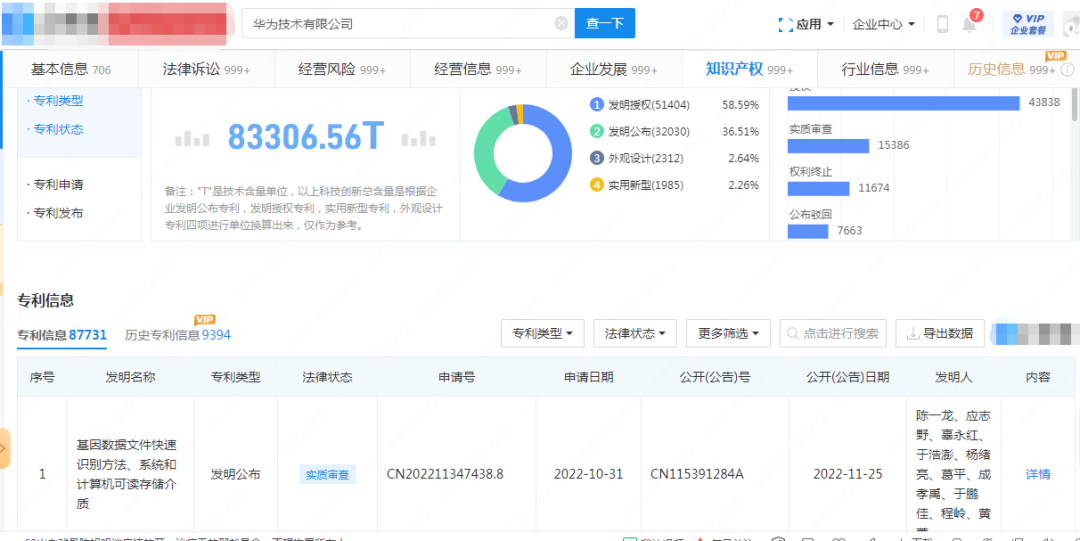
According to the Innovation and Intellectual Property White Paper 2020 released by Huawei, continuous innovation investment has made Huawei one of the largest patent holders in the world. By the end of 2020, Huawei has held more than 40000 (more than 100000) valid patents globally, of which more than 90% are invention patents.
A patent data company in Germany released a report on "Fact Finding of 5G Standard Patent Claims". As of January 1, 2020, there were 21571 5G standard patent claims in the world, of which Huawei had 3147, ranking first, followed by Samsung (2795), ZTE (2561), LG Electronics (2300), Nokia (2149) and Ericsson (1494).
Huawei is currently investing in the research and development of next generation technical standards, including 6G, WiFi7 and AI Video Coding.
The commercial value of R&D investment is not only reflected in products, but also patent licensing is a way to continuously obtain returns. Otherwise, patent application is easy to become an economic burden for enterprises.
Fan Zhiyong, head of Huawei's Intellectual Property Department, believes that it is a positive sign that enterprises recognize the value of intellectual property and are willing to pay consideration for it. This represents that China's intellectual property protection is maturing, and the positive cycle of technology R&D investment will gradually take shape.
In fact, it is not easy to apply for a patent as an enterprise applies for a trademark. Not any invention or design can be successfully approved and authorized and become a patent with legal effect protection.
Once an invention is successfully patented, its value can indeed be extended indefinitely!
First of all, it is conducive to the protection of its own products.
For technology-based enterprises, patents are particularly important and can be legally protected.
For example, the appearance of goods produced and sold by the enterprise and the technology manufactured by the enterprise can, to a large extent, prevent others from stealing their own technology by applying for patents. Prevent patent infringement and form market monopoly.
Secondly, owning patents can make market layout.
The meaning of patent is that it belongs to the exclusive rights and interests of individuals. Without permission, it cannot be easily used by any other business or individual. It is conducive for enterprises to use patents for market layout, further monopoly and increase economic benefits.
Patent itself is also an intangible asset.
Having a large number of patents, to some extent, means that it is a symbol of the strong strength of enterprises.
Note: The pictures and texts come from the network. If you have valuable suggestions, please feel free to contact us to revise and update!

One on one service for appointment experts
