
In recent years, trademark infringement cases in supermarkets and small shops have occurred frequently. The reason is that the awareness of rights protection of brand companies is constantly improving, while the awareness of intellectual property rights of sellers is still very weak and lack of legal knowledge of infringement. Moreover, most of these cases end in supermarkets and small shops being sentenced to infringement compensation. Let's look at several related cases:
Case 1: the supermarket sells two pairs of socks and loses 6000 yuan
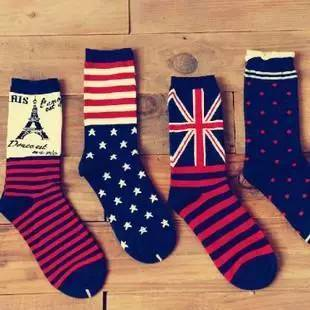
Liu opened a small supermarket in Jinan. What surprised him was that he sold two pairs of socks for 25 yuan. He was sued by Langsha Knitting Co., Ltd. and finally compensated 6000 yuan. Originally, the socks sold by Liu were not produced by Langsha company. The court held that the packaging of the socks sold by Liu was similar to the outer packaging of Langsha company, and the "Langsha" trademark approved and registered by the plaintiff Langsha company was used on the outer packaging without authorization. His sales behavior had infringed the exclusive right of the plaintiff Langsha company to use the registered trademark and constituted infringement, so he should bear the tort liability and judge him to stop the infringement immediately, Compensate Langsha company for economic losses and reasonable expenses totaling 6000 yuan.
Case 2: the supermarket owner was claimed 16000 yuan for a 50 cents "Zhonghua" pencil

On March 7, 2020, the owner of a supermarket on Fuhui road in Lijiang received a summons from the Dali intermediate people's court. The reason for the summons was "dispute over infringement of trademark rights". After opening the store for so many years, he never thought he would be involved in a lawsuit because of a small pencil. The reason why he was prosecuted was that the owner of "Zhonghua brand" pencil found that his supermarket sold fake "Zhonghua brand" pencils through entrusted investigation. The "Zhonghua brand" pencil manufacturer asked the supermarket owner to immediately stop the goods infringing the right to use the "Zhonghua" brand registered trademark, and pay 16000 yuan of infringement compensation, notarization fees, lawyer fees, travel expenses, etc.
Case 3: a supermarket infringed the "six gods" trademark and compensated 10000 yuan

The plaintiff Shanghai Jiahua United Co., Ltd. has the exclusive right to use the registered trademark of "Liushen" brand cosmetics. It is found that the defendant Sanya Haitang Bay nanyifeng supermarket sells the goods infringing its exclusive right to use the registered trademark for profit. Therefore, the plaintiff filed a lawsuit to the court for an order to immediately stop infringing the exclusive right to use the registered trademark of the plaintiff No. 1116603 Liushen and stop selling the infringing products; Request the defendant to compensate for economic losses and reasonable expenses totaling 40000 yuan. Finally, the court heard and presided over the mediation: the defendant Sanya Haitang Bay Nanfeng supermarket promised to stop and no longer infringe the trademark right of Liushen, and compensate the plaintiff 10000 yuan.
There are many similar cases. Some people think that the supermarket owner is very unjust. After all, it is not the source. Why not fight the source and the terminal? Why don't brands go to the manufacturers and wholesalers who make fake products; Others believe that: in any case, it is a fact that supermarkets and small shops sell fake goods, and the illegality of their behavior cannot be covered up because of their subjective ignorance; In addition, there are hostages who doubt whether some brands "make huge profits" in the name of "cracking down on counterfeiting".
No matter how others understand it, if you are a supermarket or small store owner, you must recognize the following two points:
What is trademark infringement and what are the acts of trademark infringement?
Trademark infringement is trademark infringement, which means that the perpetrator uses the same or similar trademark with its registered trademark on the same or similar goods without the permission of the trademark owner, or other acts that interfere with or hinder the trademark owner from using its registered trademark and damage the legitimate rights and interests of the trademark owner. According to Article 57 of the trademark law, any of the following acts shall be an infringement of the exclusive right to use a registered trademark:
(1) Using the same trademark as its registered trademark on the same commodity without the permission of the trademark registrant;
(2) Without the permission of the trademark registrant, using a trademark similar to its registered trademark on the same goods, or using a trademark identical to or similar to its registered trademark on similar goods, which is easy to cause confusion;
(3) Selling goods that infringe upon the exclusive right to use a registered trademark;
(4) Forging or manufacturing without authorization the logo of another person's registered trademark or selling the logo of the registered trademark forged or manufactured without authorization;
(5) Changing its registered trademark without the consent of the trademark registrant and putting the goods with the changed trademark back on the market;
(6) Deliberately providing convenience for others to infringe upon the exclusive right to use a trademark and helping others to infringe upon the exclusive right to use a trademark;
(7) Causing other damages to another person's exclusive right to use a registered trademark.
Obviously, the behavior of supermarket or small store owners meets the provisions of paragraph 3 above.
If your behavior does constitute infringement, do you need to bear the corresponding tort liability?
The second paragraph of Article 64 of the trademark law stipulates: "if a seller does not know that the goods infringe the exclusive right to use a registered trademark and can prove that the goods are legally obtained by himself and explain the provider, he shall not be liable for compensation."
Article 79 of the regulations for the implementation of the trademark law stipulates: "the following circumstances are those that can prove that the goods are legally obtained by themselves as stipulated in Article 60 of the Trademark Law: (1) there is a supply list and payment receipt legally signed and sealed by the supplier and verified to be true or recognized by the supplier; (2) there is a purchase contract signed by the supplier and the seller and verified to have been truly performed; (3) There is a legal purchase invoice and the items recorded in the invoice correspond to the goods involved; (4) Other circumstances that can prove the lawful acquisition of the goods involved. "
The above are the corresponding exemption clauses stipulated in the trademark law and the implementation regulations. It seems that supermarket or small store owners want to defend against legal sources to avoid liability. First, they need to exercise reasonable duty of care, that is, they should pay general attention to what they fail to find sold as infringing products. Second, they can provide evidence of the legal sources of infringing products, such as purchase channels, purchase methods, contract invoices, and the evidence provided corresponds to the products one by one. If you can't do the above two points, you need to be responsible for your own infringement.
This reminds the operators of supermarkets or small stores that they must standardize the purchase channels, check the brand authorization qualification of merchants when necessary, ask for bills in time, and keep them for safekeeping, so that in case of infringement disputes, they can exercise their legitimate source defense right in time and exempt themselves from infringement liability as much as possible.
Note: pictures and texts come from the Internet. If you have any valuable suggestions, please feel free to contact us for correction and update!

One on one service for appointment experts
